Lure design studio · in your browser
Design your own lure. See it swim before you print it.
Shape a crankbait, jerkbait, glide bait or swimbait, balance it, airbrush it, and watch a physics simulation swim it on your retrieve. Then export print-ready files, or have the maker build it for you by hand.
Design during the trial, with one 3D-print export in total. No credit card or automatic paid renewal.
- Physics-based swim simulation
- Airbrush paint studio
- 3D-print export
- Hand-built custom lures

- Length
- 2-1/2 in
- Weight
- 3/8 oz
- Buoyancy
- Floating
- Max depth
- 13.3 ft
What's inside
Everything between the idea and the water
Most homemade lures take a dozen prototypes before one swims right. LureLab lets you do most of that testing on screen, so the first one you print is already close.
-
Physics-based swim simulation
Wobble, roll, dive curve and line tension come out of the physics, not a canned animation. Change the bill and watch the action change.
-
Paint and airbrush studio
Spray fades, lay scale netting and tiger bars, add text, eyes and your own decals, right on the 3D model.
-
3D-print export
Split shells with ballast pockets, wire channel and bill slot, or two-part molds for soft plastics. 3MF or STL, plus a build sheet.
-
Hand-built by the maker
Share the shape, quantity and finish you have in mind. We discuss production options and feasibility before preparing a separate quote.
How it works
From blank to bite-ready in five steps
-
Pick a starting point
Start from one of 10 proven designs, from a square-bill to a weightless stick worm.
-
Shape and balance it
Tune body, bill angle, line tie, hooks and weights. One click ballasts it to float, suspend or sink.
-
Paint it
Airbrush the pattern in 3D and get a step-by-step paint guide for the real thing.
-
Swim-test it
Cast it, crank it, twitch it, walk it. Read the wobble, roll and depth before you build anything.
-
Print it or commission it
Export files for your printer, or have the maker build it by hand and ship it to you.
Swim simulation
Physics, not animation
Below is a 5-7/8 in two-piece glide bait on a slow, steady retrieve (1.1 ft/s), seen from above. Every pose is a frame from the simulator. The S-glide repeats every 2.5 s and swings about 4.6 in to each side, and nobody keyframed it.

What the simulator models
- Wobble from vortex shedding. The bill sheds vortices the way it does in water, and that is what drives the wobble. Change the bill angle or the line tie and the action changes with it.
- The water moves with the lure. Added mass (about as heavy as the lure itself, side to side), body drag and bill lift are all included.
- Line, hooks and split rings. The line sags and drags, and the trebles swing on their hangers. Bigger hooks really do dampen the action.
- Your retrieve. Steady, stop-and-go, twitch, walk-the-dog and lift-and-drop, on a long cast or in a test-tank view.
- Read-outs anglers care about. Wobble frequency and width, roll, nose angle, running depth and line tension.
Honest about the limits. It is a fast, reduced-order model, not a full fluid simulation. It gets the character of the action and the trends right, and we check it against published tank tests. Absolute wobble width can still be off, so a bathtub test is the final word.
Dive curves from the simulator
The same 2-1/2 in deep diver on three line sizes, cast and cranked back from splashdown (left) to the rod tip (right). Thinner line has less drag, so the bait digs about 2.3 ft deeper.
| 8-lb mono (0.26 mm) | 14.7 ft |
|---|---|
| 12-lb mono (0.33 mm) | 13.3 ft |
| 17-lb mono (0.38 mm) | 12.4 ft |
Paint studio
Airbrush it before you pick up the airbrush
Paint the way lure painters do: white base, flash, fades, stencils, eyes and a clear topcoat, layer by layer on the 3D model.
- Airbrush, eraser and color picker with opaque, transparent (candy), pearl, fluorescent and metallic paints.
- Stencils and patterns: scale netting, bars, tiger stripes, spots, splatter, gill plates and a lateral line.
- Text, eyes and decals. Put your name on the belly or drop in your own image.
- One-click schemes to start from: shad, sexy shad, chartreuse, fire tiger, ghost, craw, chrome, perch and more.
- Take it to the bench: a printable paint guide with 1:1 views, a color list and the order of every coat.
 Chartreuse
 Fire tiger
 Perch
 Red head
 Crawfish
 Ghost
The same square-bill body in six classic schemes, rendered in the studio.
3D-print export
What you simulate is what you print
The export builds real parts from your design, then folds their weight back into the model, so the read-outs and the swim test match the lure that comes off your printer.
Trial accounts include design tools and one 3D-print export in total. Further exports require a subscription. Monthly and annual subscriptions both include 10 exports per subscription month.
- Hard baits: left and right shells with ballast pockets, rattle chamber, through-wire channel or screw-eye pilot holes, bill slot and alignment pins. Or one piece with pause layers to drop the weights in.
- Jointed baits: every section split in halves, with hinge knuckles or eye links.
- Soft plastics: a two-part pour mold with sprue, vents and registration keys.
- A build sheet with the weight budget, the hardware list and the assembly steps, including what the halves should weigh before you glue them shut.
- 3MF or STL for any slicer. Files are in millimeters, as slicers expect; the build sheet shows inches and ounces too.

Preset gallery
Start from a lure that already swims
Each preset is balanced as printed and ready to modify. Weights and buoyancy below are the studio's as-built numbers.
-
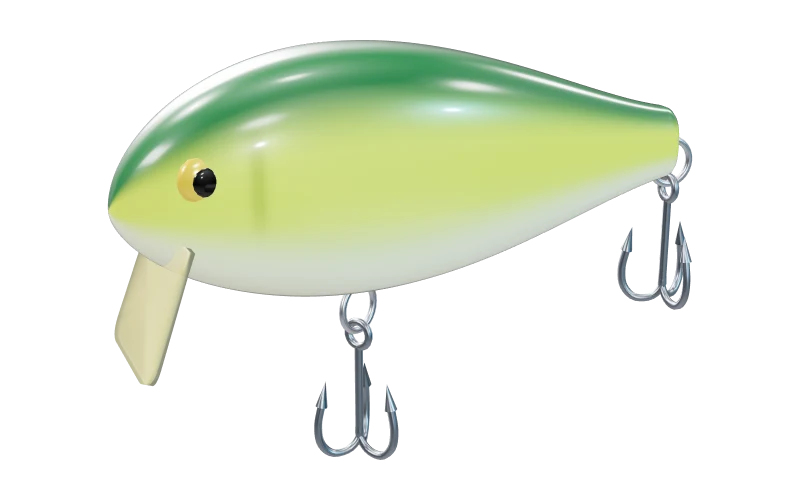
Crankbait
Square-bill crankbait
- 2-3/8 in
- 3/8 oz
- Floating
A steep square bill and a nose tie. Wide, hunting wobble in 2 to 5 ft of water, and it deflects off wood and rock instead of hanging up.
Split-shell print
-
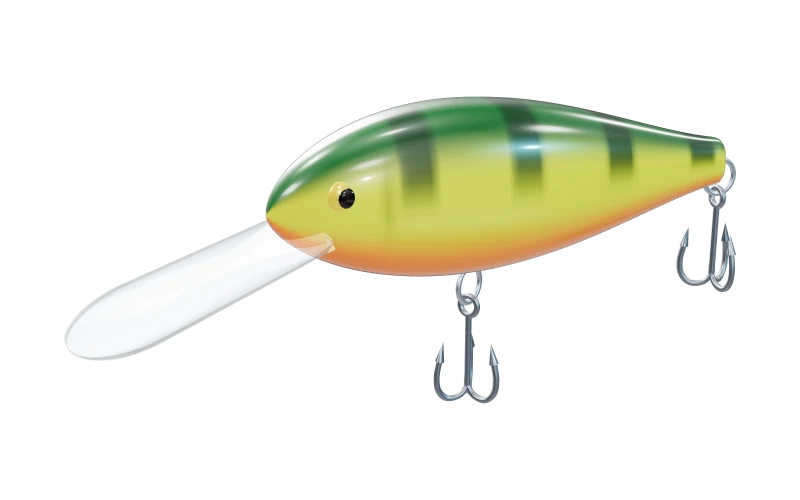
Crankbait
Deep-diving crankbait
- 2-1/2 in
- 3/8 oz
- Floating
Long round bill with the line tie on the bill. Floats at rest and digs into the low teens on a long cast. Line size changes how deep it gets.
Split-shell print
-
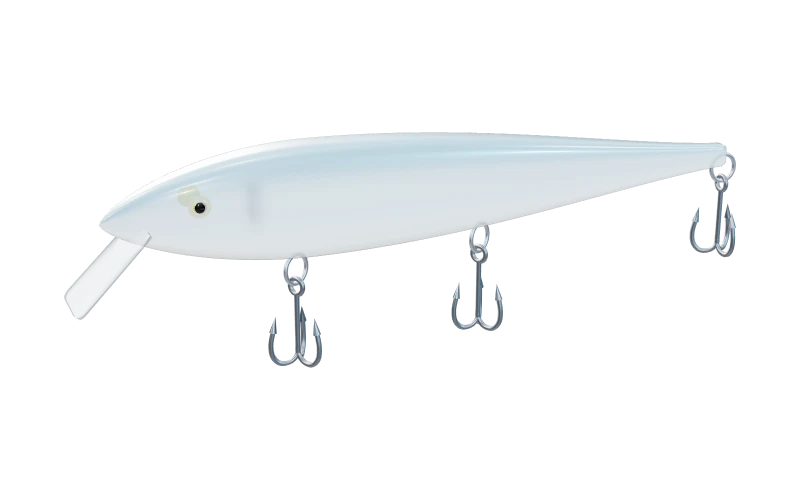
Jerkbait
Suspending jerkbait
- 4-3/8 in
- 7/16 oz
- Suspending
Slab-sided minnow with tungsten weights front and back, tuned to hang dead still on the pause and dart side to side on the twitch.
Split-shell print
-
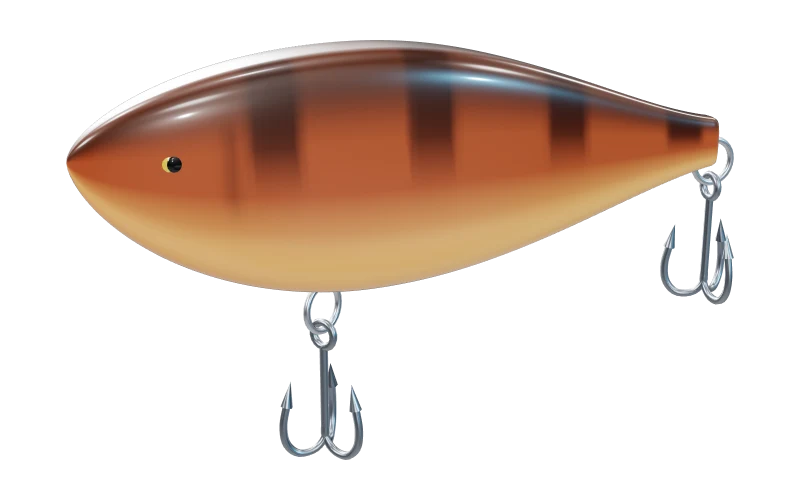
Lipless
Lipless crankbait
- 2-3/4 in
- 7/16 oz
- Sinking
High-shouldered, flat-sided sinker with a rattle chamber. A tight, fast vibration on a steady retrieve, made for burning across grass flats.
Split-shell print
-
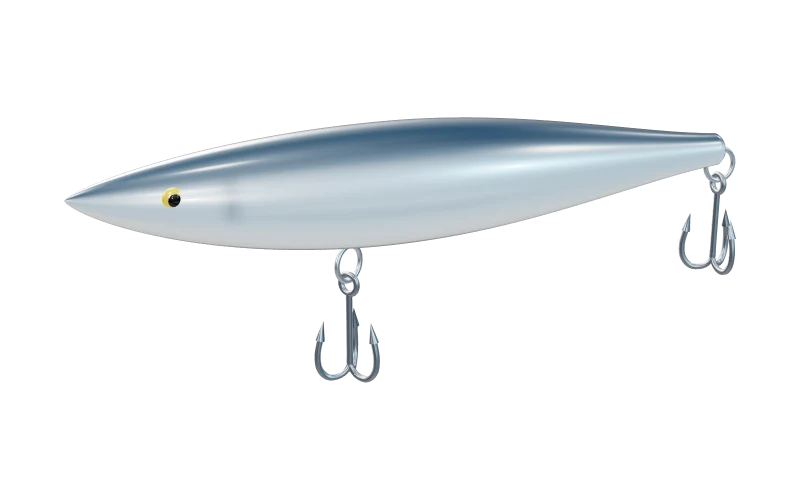
Topwater
Walk-the-dog pencil
- 4-3/8 in
- 1/2 oz
- Floating
Cigar-shaped topwater weighted to sit tail-down. Slack-line twitches walk it side to side across the surface.
Split-shell print
-
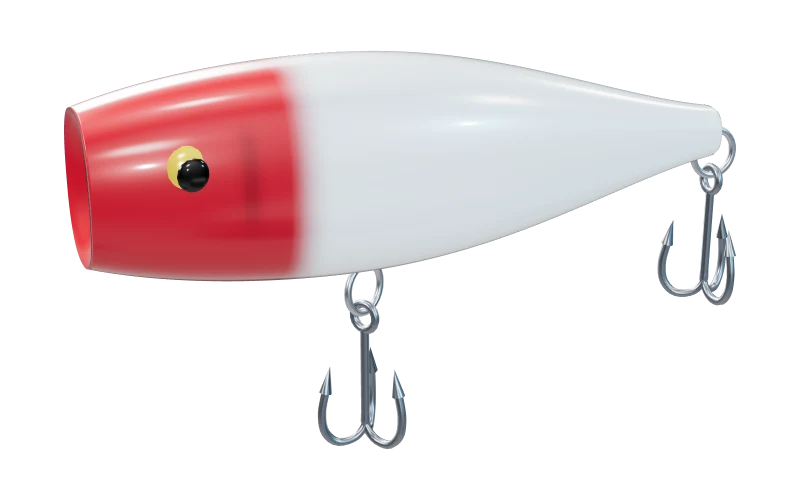
Topwater
Cupped popper
- 2-1/2 in
- 3/8 oz
- Floating
Compact floater with a cupped face that spits and pops on short twitches and sits tail-down between them.
Split-shell print
-
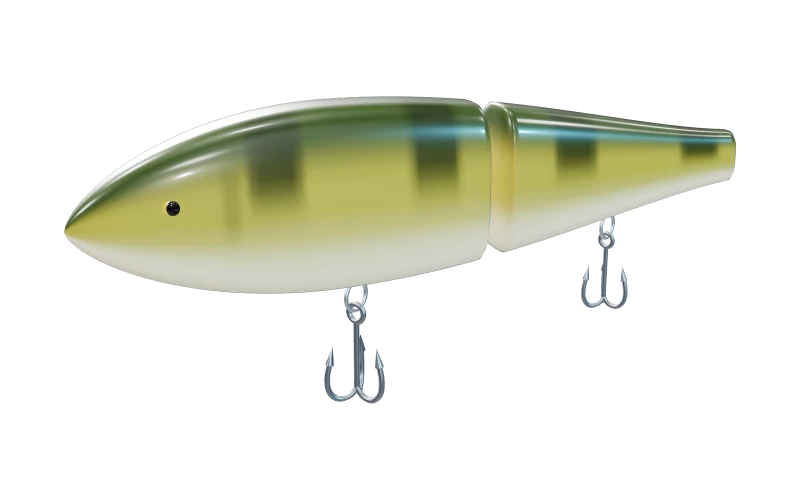
Glide bait
Two-piece glide bait
- 5-7/8 in
- 2-1/8 oz
- Slow-sinking
Slow-sinking, two-section glide. A slow roll or a rod sweep sends it into wide S-turns, flashing its side on every swing.
2 hinged sections
-
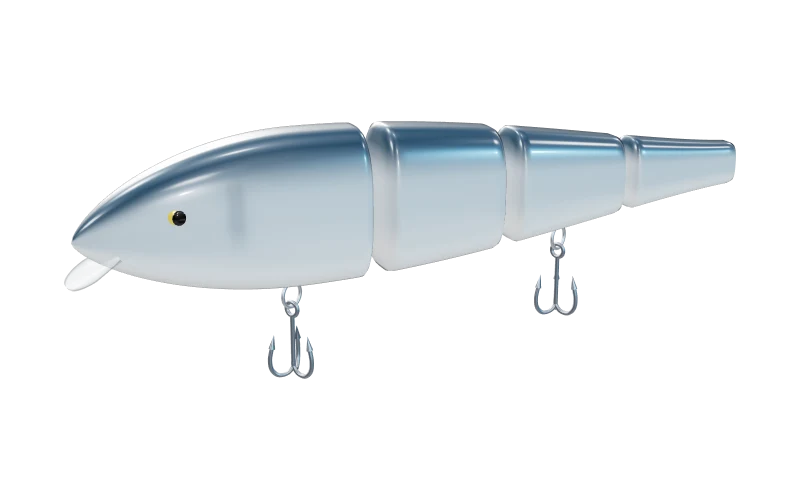
Swimbait
Four-section swimbait
- 6-1/4 in
- 1-7/8 oz
- Slow-sinking
Multi-jointed hard swimbait with a small lip. On a steady retrieve the S-wave runs from head to tail like a baitfish.
4 hinged sections
-
Soft plastic
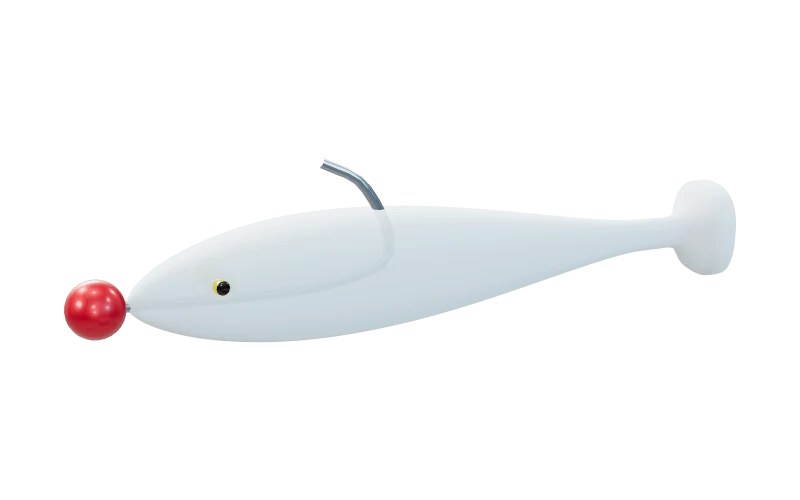
Paddle-tail swimbait
- 3-3/4 in
- 1/2 oz
- Sinking
Soft paddle tail on a 3/16 oz tungsten jig head. The paddle kicks and rocks the whole body on a steady retrieve.
Prints as a two-part pour mold
-
Soft plastic
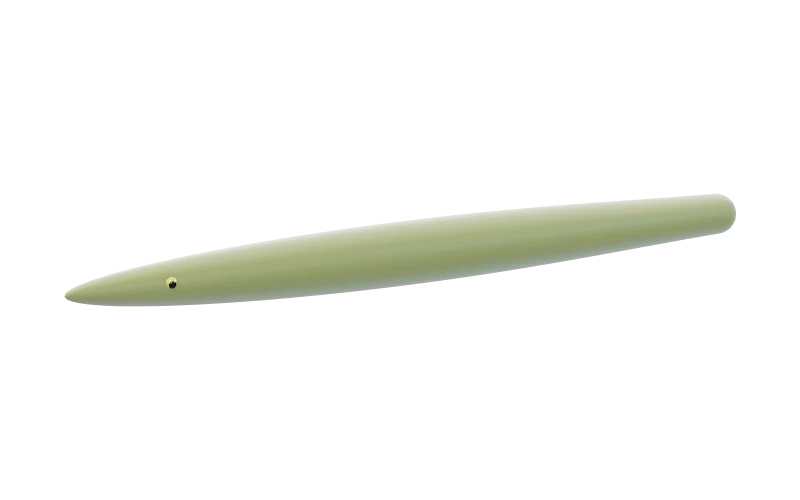
Salted stick worm
- 4-7/8 in
- 5/16 oz
- Sinking
Salt-impregnated stick worm fished weightless. Both ends shimmy on the fall, then it glides down again after every lift.
Prints as a two-part pour mold
Lengths rounded to the nearest 1/8 in and weights to the nearest common ounce size. Every design shows exact values in inches, ounces and grams.
Custom builds
Rather not build it yourself? I'll build it for you.
Send the design straight from the studio. You get a quote first, and you only pay once you accept it.
Send your design
The shape, weights, hooks and paint, exactly as you saw them in the studio.
Get a quote
We review feasibility, quantity, materials and finish, then quote the price and estimated timing separately.
Discuss the build details
Talk through the shape, quantity and production options before confirming what can be made and requesting a separate quote.
Built by hand and shipped
Follow it from production to tracking to your mailbox.
Your first 14 days are on us
Design and try one 3D-print export during the trial, with no credit card. Monthly and annual subscriptions both include 10 exports per subscription month. Your saved designs stay in your account after the trial.